
Correct by default
Double-entry validation rejects an unbalanced entry before it can distort a report.
For small businesses
Hosted double-entry books for owner-run businesses: every balance traceable to the entries behind it, reports your accountant can read, and a ledger that stays yours if you ever leave.
 View full screenshot
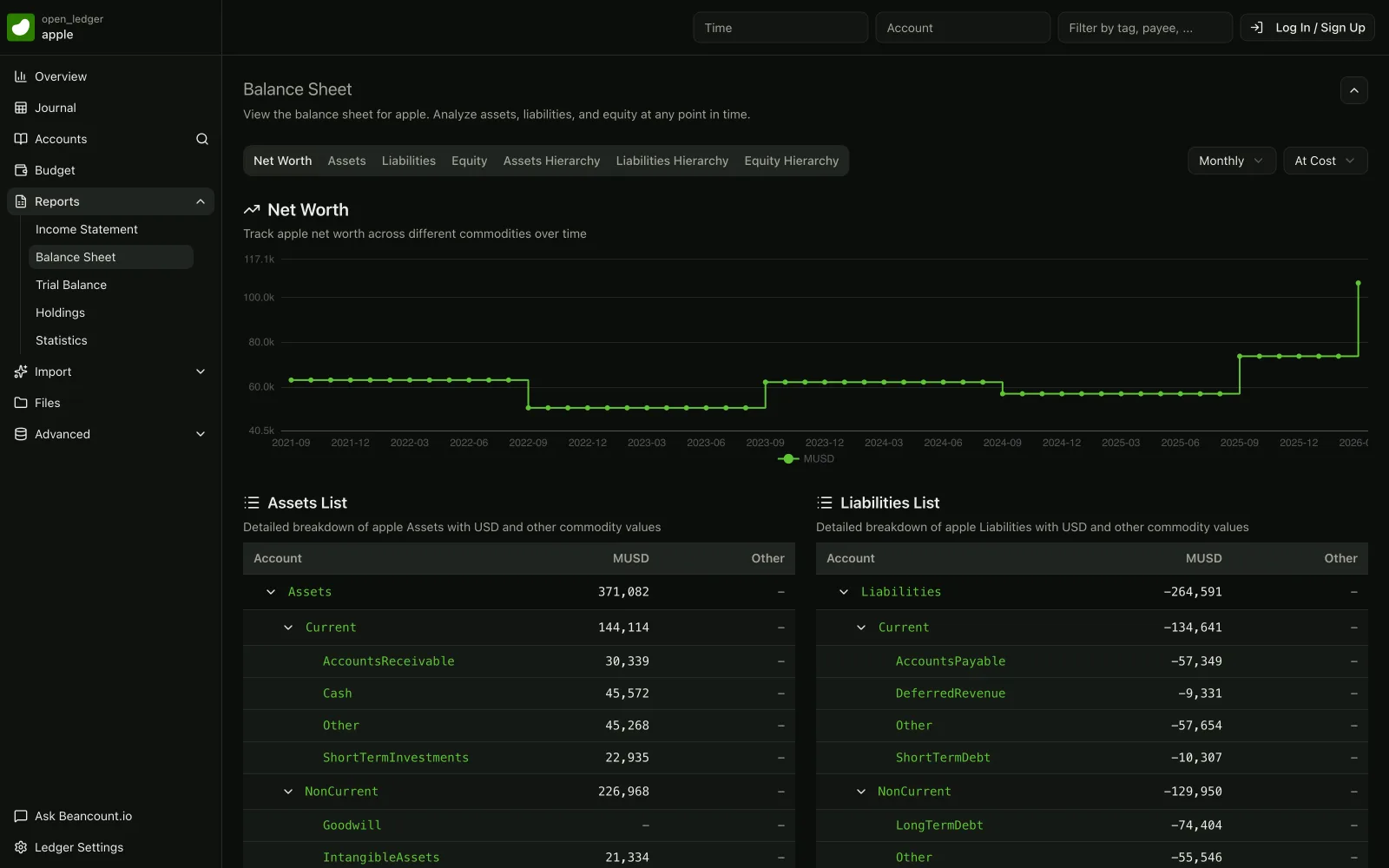
Real books, without the bloat
Every transaction has to balance before it is accepted, so the numbers you read are numbers you can trust — without paying for features a small firm never uses.
See how it compares with other QuickBooks alternativesBuilt for your accountant
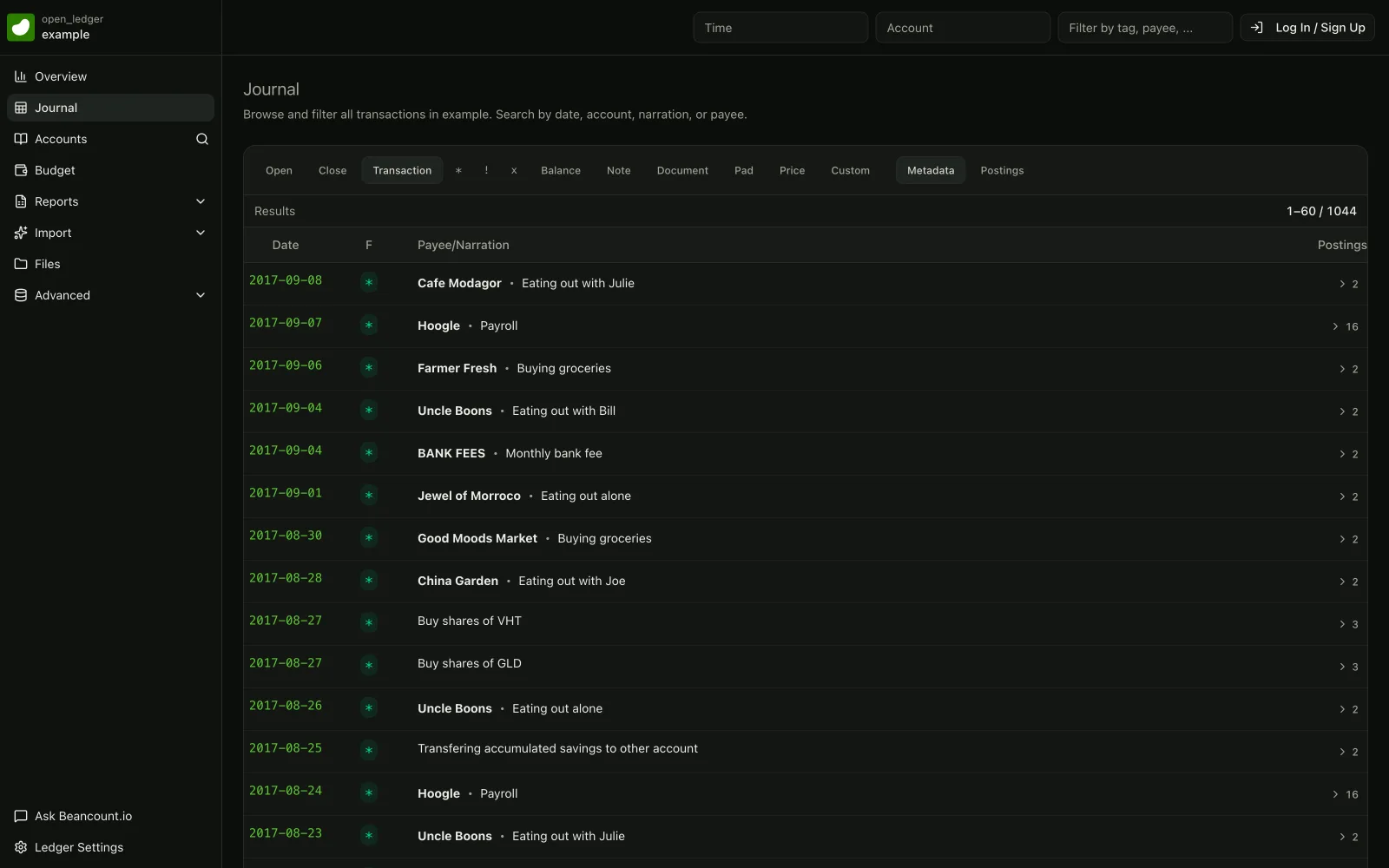
When a number looks wrong, nobody has to guess what produced it. Every balance traces back to readable entries, and every change leaves a history.
 View full screenshot
Your data, your decision
Your ledger is an open plain-text file, not a record inside someone else's database. That is the answer to the question every owner should ask: what happens if I cancel?
Why owners switch
Small firms do not need more features. They need books that are right, that their accountant can check, and that they will still be able to open in ten years.
Double-entry validation rejects an unbalanced entry before it can distort a report.
Your accountant reads standard reports and can follow any number down to the line that produced it.
Use it in the browser and on your phone. Backups, upgrades and servers are handled for you.
The ledger is a standard Beancount file. Take it with you whenever you want, at no cost.
What switching from QuickBooks to plain-text books means in practice.
For the books themselves, yes: double-entry accounts, bank imports, reconciliation and financial reports. Invoicing, payroll, payments and tax filing stay in separate tools whose results you record in the ledger. If you want all of those in one app, QuickBooks is the easier all-in-one choice.
Not to review your books. Your accountant reads a standard balance sheet, income statement and trial balance, and can trace any figure to the entries behind it. Editing entries directly takes learning a small, readable syntax, so most owners keep the books and share them for review.
You keep them. Export the complete ledger, with its full history, as a plain-text Beancount file and open it with the free, open-source Beancount and Fava tools, or hand it to your accountant. There is no proprietary format to convert and no fee to leave.
Yes, in the ledger. Record tax you collect in a liability account per tax and jurisdiction, so the balance shows what you owe. Every currency is first-class, with prices for conversion. Preparing and filing returns stays with you or your accountant.
Free to start. Correct, accountant-ready books that stay yours — hosted, with nothing to install.